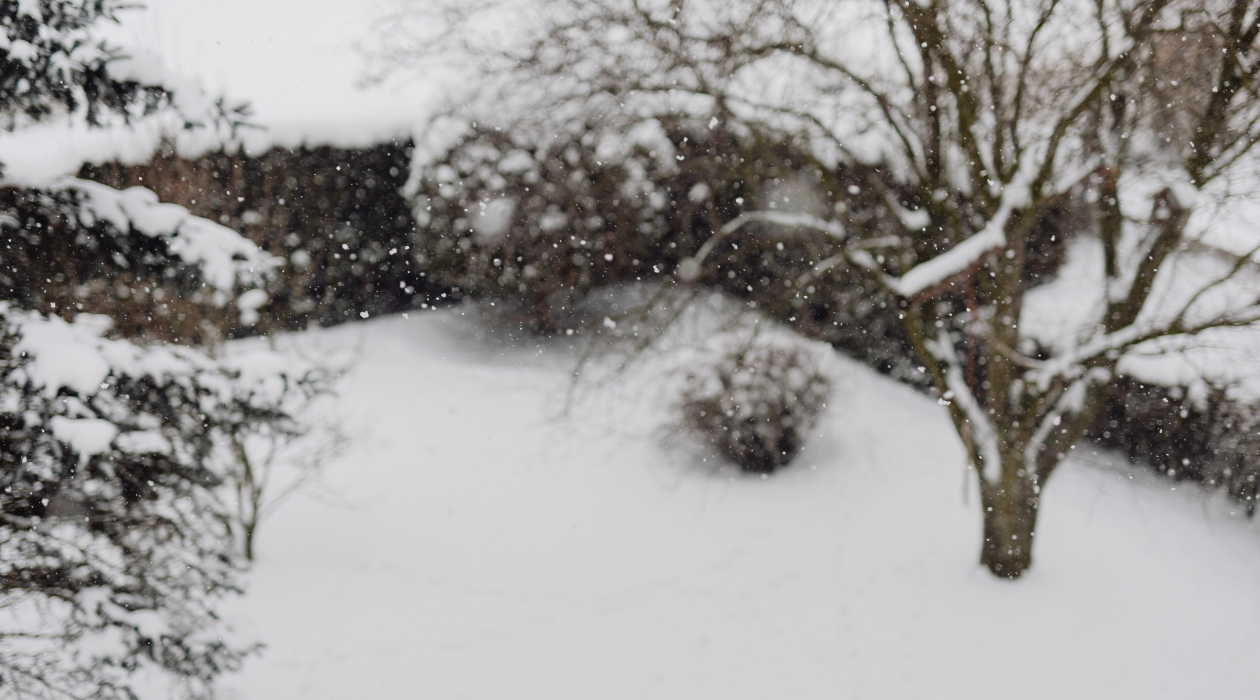
With this recent winter storm, it is certainly understandable that we are concerned about the plants in our landscape. I want to talk about how freezing conditions can damage plants, how plants have evolved to protect themselves from harsh winter weather, and what, if anything, people can do to help plants recover.
Like all living things, plants are composed mostly of water. In fact, it has been found that as much as 90 to 95 percent of a plant is water. As liquid water freezes to ice, the density of the water molecules decreases, meaning that the volume INCREASES as liquid water is changed into a solid. This is why icebergs float rather than sink to the ocean floor. Using high-powered microscopes, it has been observed that the ice crystals formed have very sharp, jagged edges rather than smooth surfaces. Any water within plant cells which freeze will expand outward putting pressure on the plant’s cell walls. Further, the jagged edges of the ice crystals can slice or rupture these cell walls, causing the individual cells to die. This is why, for evergreen shrubs, the outer foliage of a plant can turn brown or black after severe winter damage. Inner foliage is somewhat protected from freeze injury because the outer foliage, along with the air layer within the canopy forms a “thermal blanket” of dead air space around the inner foliage.
Plants have amazing mechanisms to combat freezing weather. The process is called Cold Hardening. For deciduous plants, one of the ways they protect themselves is by dropping leaves which would otherwise be subject to winter injury. Both deciduous and evergreen plants have the ability to translocate various biochemicals into their cells to lower the freezing point of water. Therefore, water within the plant’s cells will not freeze to ice crystals until several degrees BELOW the normal freezing point. This mechanism is the same science we follow when we add antifreeze to the radiator of our vehicles. Another way plants protect themselves from freezing damage is to reduce the moisture content of their cells. This reduces pressure within plant cells. As a landscape service company, Charter Vista Landscaping follows this same strategy when we blow out the water from your irrigation systems during the Irrigation Winterization procedure.
Plants have a hormonal system to sense the longer dark periods (shorter days) of fall and winter compared to spring and summer. The increasing length of darkness triggers the plant to begin the Cold-Hardening process. Cold-hardening is a gradual process, however. A few years ago, when the temperatures dropped from almost 70 F to the teens within a 12-hour period, many plants were not prepared for the sudden, dramatic temperature drop. Less cold-hardy type plants could not adjust to the drastic temperature change, and many were killed or at least severely injured. Among the plants most severely affected were Camellias, Cryptomerias, and Loropetalums. However, many Loropetalums eventually began producing new foliage.
Just before this winter storm event, we had some rain to hydrate the soil. This was beneficial from the standpoint of helping to protect plant roots. To understand this, recall a time after you’ve been outside on a hot summer day or after a workout at the gym. The water film on your skin begins to evaporate and you feel a cooling sensation. This is because heat from your skin is absorbed by the water molecules on it. This heat energy from your skin is then used to evaporate the water film. The chemical term for this is Heat of Vaporization. A similar, but reverse, process called Heat of Fusion occurs when substances like water change from a liquid to a solid. As liquid water in soil freezes to ice, the water gives off a lot of heat energy to the surrounding soil and roots. The higher the moisture content of the soil, the greater the amount of heat transferred to soil. This keeps soil temperatures in the root zone higher than the above-ground air temperatures.
We can’t control the weather, but what can we do to help our plants after a winter storm event like we have just had? First, do not rush out to remove snow and ice from your plants. It is not worth the risk of slipping and injuring yourselves. Further, removing ice or snow from them can cause more damage because frozen plant tissues are brittle and will easily snap. After the snow and ice have dissipated, do not rush to trim off the winter-burned foliage either. It may be a little unsightly for the short term, but the outer foliage will still protect the inner foliage from future winter damage. There may have been some breakage of limbs or stem tissues due to the weight of the ice and snow. If so, do not risk your own safety trying to remove the damaged tissue. Charter Vista Landscaping has professionals who are trained to do this work safely and properly from a horticultural standpoint.
If you are concerned about whether a plant was killed, one of the simplest ways to assess the damage is to scratch the outer stem tissue with your fingernail. If you see green tissue underneath, this is a good sign. For shrubs within reach from the ground, start by scratching the upper or outer stems first since they are the most susceptible to freeze injury. If you find only dry brown tissue, work your way downward until you find green tissue beneath the surface. This will help you determine the extent of the damage.
Ensuring that your plants have an adequate layer of mulch to cover the planting bed areas is an important way to protect your plants. Ideally, a 2-to-3-inch layer of mulch is sufficient to help protect root systems from both hot and cold temperature extremes. There are several types of mulch available including shredded hardwood bark and pine straw. Other benefits of mulch include reduction of the amount of weed seeds which can germinate and conservation of soil moisture. Many of our clients are on a landscape management program which includes an annual application of fresh mulch. If your current landscape program does not include this service, you may want to consider upgrading your program so you will have less to worry about in your landscape. We will also be happy to provide a fresh layer of mulch for your landscape as a separate landscape enhancement service. Feel free to contact Charter Vista Landscaping with any landscape concerns or questions. Our office number is 662-895-4110. We are always available to help!